
Juab County Property Value Records Show Different Numbers
Utah counties assess locally valued property at 100% of fair market value. A qualifying primary residence generally receives a 45% residential exemption, which leaves 55% taxable. A recorded deed may state consideration or transaction terms. How that field appears on EagleWeb varies. Keep three amounts separate. Note the Assessor's valuation, an actual sale price, and the taxable figure on a Treasurer account. They describe different things.
| Value | What It Is | Where |
|---|---|---|
| Market value | Assessor’s 100% fair-market estimate. | Assessor record / UGRC LIR. |
| Taxable value | Value remaining after an applicable exemption. | Assessor and tax account. |
| Recorded sale consideration | Transaction amount or terms if stated in the instrument. | Deed; EagleWeb display is unverified. |
| Total and land market | Separate total and land values, where populated. | UGRC LIR fields. |
The state's statistical report puts primary residential property at a 100% assessment level. The taxable level is 55%. That gap is not a discount from a negotiated sale. It is simply a tax calculation rule. The Assessor's figure is an estimate for assessment. A deed, while it reflects one specific transaction, only shows an amount if its terms disclose one.
Juab County Property Value and the Utah Residential Exemption
Utah's residential property-tax rules generally apply a 45% exemption to a qualifying primary residence. That leaves 55% of fair market value taxable. Second residences and unoccupied residential parcels are generally taxed at 100% of fair market value. State rules limit the exemption to one primary residence per household. It may also require an application filed with the county Assessor. That is why a property-value display and a taxable-value amount are not synonyms. Check the parcel's classification and exemption indicator before comparing a tax account with a market-value estimate. Confirm exact field names with the Assessor when the distinction matters. The Juab Assessor describes its valuation and classification duties.
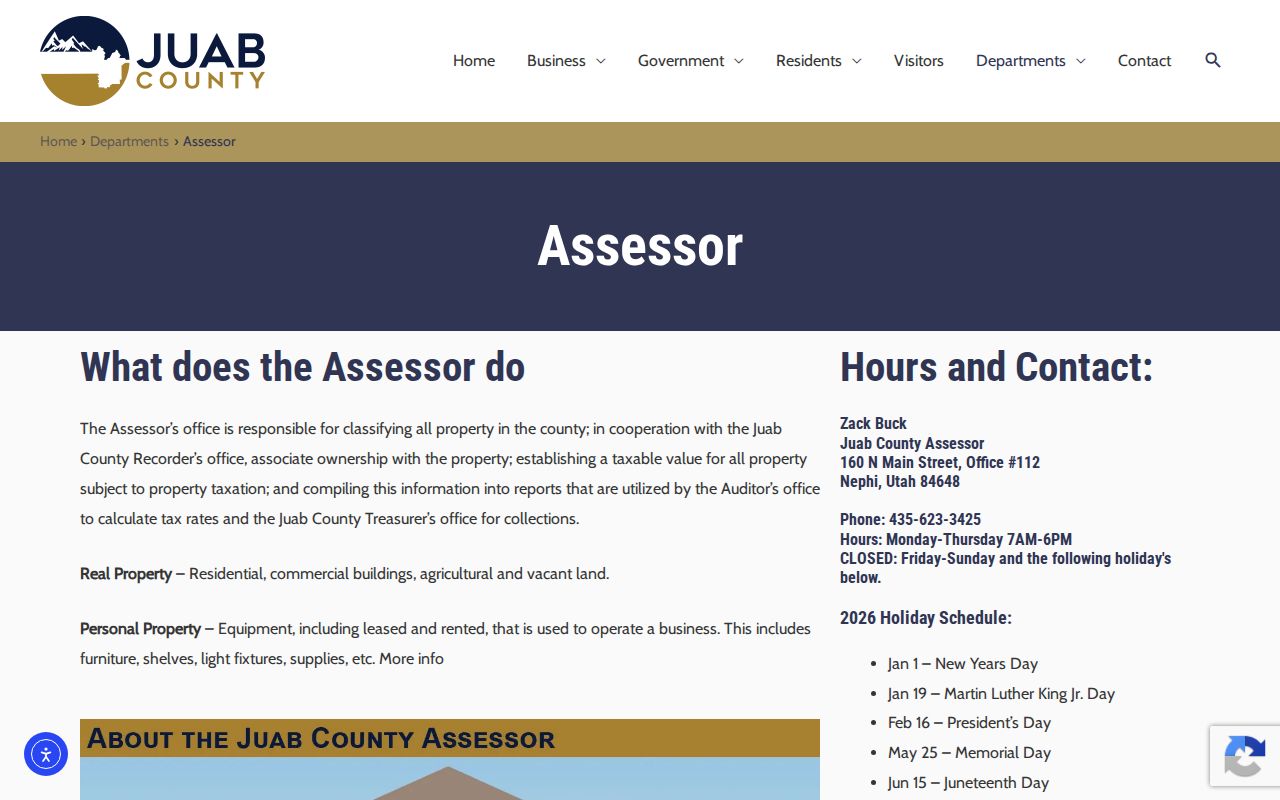
The county office establishes taxable value; the Utah exemption rule explains why that amount can fall below the full market estimate.
Juab County Property Value Fields in UGRC LIR
The UGRC Juab LIR schema includes TOTAL_MKT_VALUE and LAND_MKT_VALUE. It also includes PARCEL_ACRES, PROP_CLASS, TAXEXEMPT_TYPE, TAX_DISTRICT, PRIMARY_RES, SUBDIV_NAME, BLDG_SQFT, FLOORS_CNT, BUILT_YR, and EFFBUILT_YR when data is populated. These attributes help explain what a parcel's value actually describes. A land value is not the value of the building. A total market field is not a deed price.
The UGRC parcels page labels its basic parcels update as August 2026. Its LIR update is labeled 2025. Use the dataset's source and current-as-of fields whenever you compare it against a county screen or a recent transfer. A published value can be stale or incomplete for one specific property. So read TOTAL_MKT_VALUE alongside LAND_MKT_VALUE rather than substituting one for the other. Acreage, property class, the primary-residence flag, tax district, building square footage, and effective year built all matter. They show why a land-only parcel and an improved residential property should not be compared as the same asset. Check the source date and whether each field is populated before drawing any conclusion. The UGRC parcel-data page documents the Juab LIR fields and services.
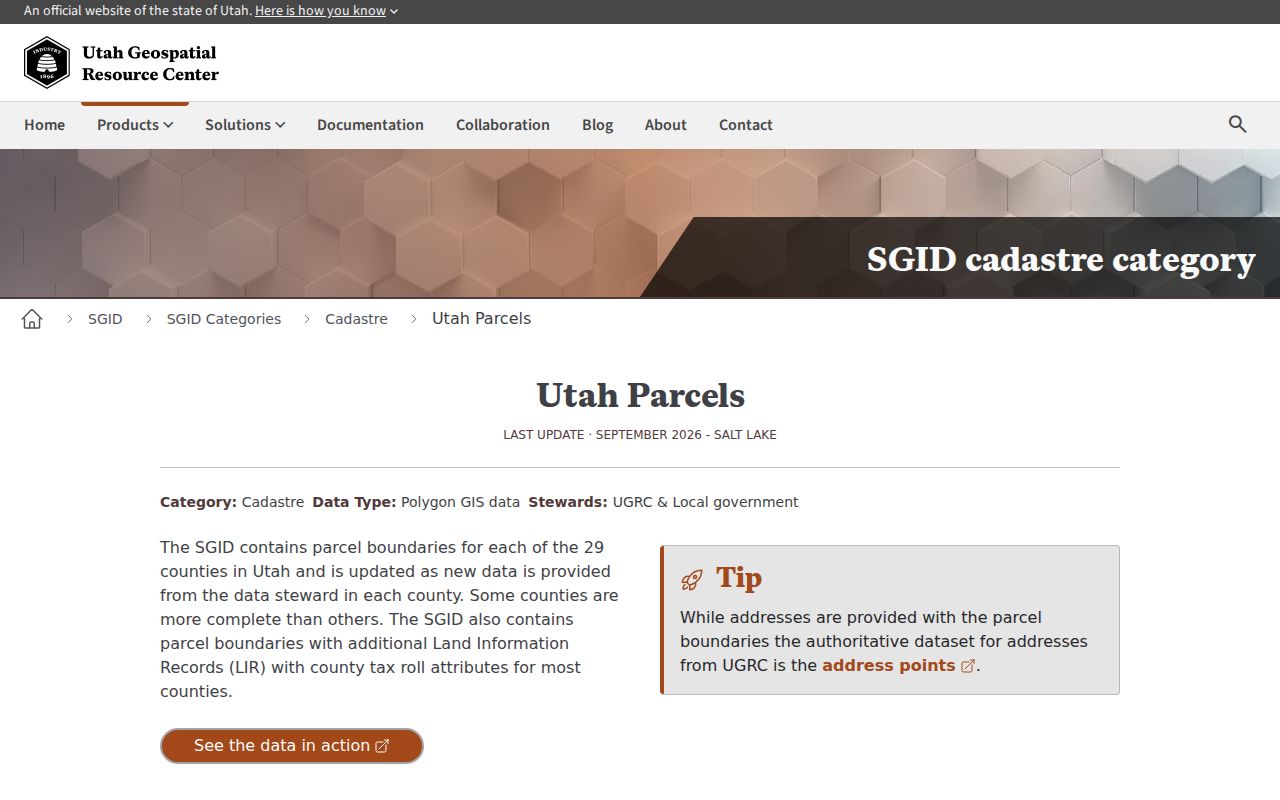
Treat the LIR as a state-published cross-check, not an appraisal or a legal title record.
Looking Up a Juab County Property Value
Start with an address and municipality in the county property-search route. Then keep the parcel ID or serial number handy. Check the Assessor's value and classification next. Compare the same parcel in UGRC LIR for a state-side view. Use a deed only when researching a transaction. The county publishes no live parcel-card sample, exact value labels, or roll-refresh cycle online.
- Locate the parcel in Juab EagleWeb and record the parcel ID and value year shown.
- Separate any market-value estimate from taxable value and note the exemption or property class.
- Cross-check total and land market fields in UGRC LIR when populated.
- Read the recorded deed for transaction terms; do not assume a sale figure is a current appraisal.
- Market value
- The Assessor’s estimate of fair market value.
- Taxable value
- The amount after any applicable exemption that is used in property-tax calculation.
- Assessment level
- The relationship of assessed value to market value; Utah reports primary residential at 100% assessment and 55% taxable level.
- Sale consideration
- The amount or terms stated in a deed, if present; live EagleWeb display is unverified.
What a Juab County Property Value Does Not Prove
An Assessor value exists for taxation. It is not what a parcel will necessarily sell for. It is not a buyer's offer or a recorded sale price. It is not a licensed appraisal for a transaction either. Values differ by year and by property characteristics. The county's live card labels and update interval are not published online.
Value versus price. A Juab County assessment supports the tax roll. For a transaction or lending decision, use a current appraisal and the actual sale documents that apply to the property.
Juab County Property Value Is Not the Deed Price
A deed records the parties and the legal description of a transfer. Consideration or sale terms may appear in the instrument. The exact display on EagleWeb varies. A sale price applies to one transaction at one point in time. The Assessor's value, by contrast, is a county valuation used for property-tax purposes. A change in one does not automatically establish a change in the other.
When comparing the two, keep the recording date, value year, parcel description, and property condition together. A subdivision split, annexation, change in land use, or new improvement can leave two records describing different property units. The records may also describe different moments entirely. The Recorder's instrument and the Assessor's classification each need their own context. Line them up side by side only after that.
Juab County Property Value Context in Nephi and Mona
Nephi is the population center of Juab County. The Census counted 6,443 residents there in 2020, with a 2025 estimate of 7,488. Growth is also visible on paper in Mona. East Hills Meadow stands as a proposed five-lot major subdivision near Center Street, with planning material running from 2024 through 2026. Treat these as context about development records. They are not evidence of a measured value trend.
To track value over time, line up dated parcel records. Then check final plat dates and permit dates. UGRC LIR carries market-value, land-value, acreage, class, and built-year fields where populated. A subdivision proposal alone proves nothing about appreciation. Without a dated parcel sample, resist calling any Juab County city fast-appreciating. Do not pin a trend on one project.
Juab County Property Value Evidence and Appeals
Utah Tax Commission Publication 31 lays out what counts as valuation-appeal evidence. It also explains how the statutory timing works. The Juab County page publishes no local annual deadline. Ask the Assessor for the current date and filing path before relying on one. Strong evidence speaks to fair market value, parcel characteristics, and the valuation date. A deed price can add context. It does not automatically set the assessed value. The separate Juab County property tax records guide explains taxable value and the residential exemption. It also covers tax-account records and the appeal deadline gap.
Organize the appeal file with care. Separate land characteristics from improvements. Keep each comparable property's sale date alongside its acreage, building area, year built, and class. The LIR supplies those fields when populated. The dataset itself warns users to weigh its source and current-as-of date. A missing building attribute is not proof a structure is absent. Likewise, never compare a land-only value against the total value of an improved home. The county publishes no local annual filing date, so confirm it before assembling evidence. Publication 31 describes the valuation appeal framework. Juab's Assessor can identify the current form plus the parcel-specific record used for the notice.