
Juab County Deed Records Begin With the Instrument Type
Every deed, mortgage, lien, and plat that touches Juab County land passes through the Recorder. That office records, stores, retrieves, and indexes those instruments. Reading a deed tells you who transferred what, to whom, and under which legal description. It cannot promise a clean slate, though. A recorded deed never certifies a clean title. Competing claims or unrecorded interests can still lurk in the property records. The historical Juab collection focuses on warranty and quitclaim deeds. The current Recorder's descriptions cast a wider net across all recorded land documents.
| Deed Type | What It Does | Common Use |
|---|---|---|
| Warranty deed | Records a conveyance with the warranties stated in the instrument. | Review the deed language and legal description for a transfer. |
| Quitclaim deed | Transfers whatever interest the signer holds, if any. | May appear in a family or interest-cleanup chain. |
| Mortgage or release | Records a security interest or a later release/satisfaction. | Check both the lien instrument and any discharge. |
| Judgment, claim, patent, decree | May affect title or possession when registered with the Recorder. | Series 6177 indexes these as well as deeds. |
| Water, mining, or land instrument | Documents a historic claim, transfer, or property interest. | Older Juab books include these local record types. |
Distinguish the instrument before you search. A deed records a conveyance. A mortgage or lien, by contrast, records a claim that burdens the property. A satisfied loan still needs a recorded release or reconveyance. Never assume it cleared on its own. The Recorder indexes these instruments. But a court docket explains any judgment or dispute behind them. The Utah Courts public portal gathers the statewide case-search links. Start with the county land index. Then turn to the originating office for tax or court details. One judgment can leave two footprints. It may appear as a court case and a separate county land-record entry. So check both.
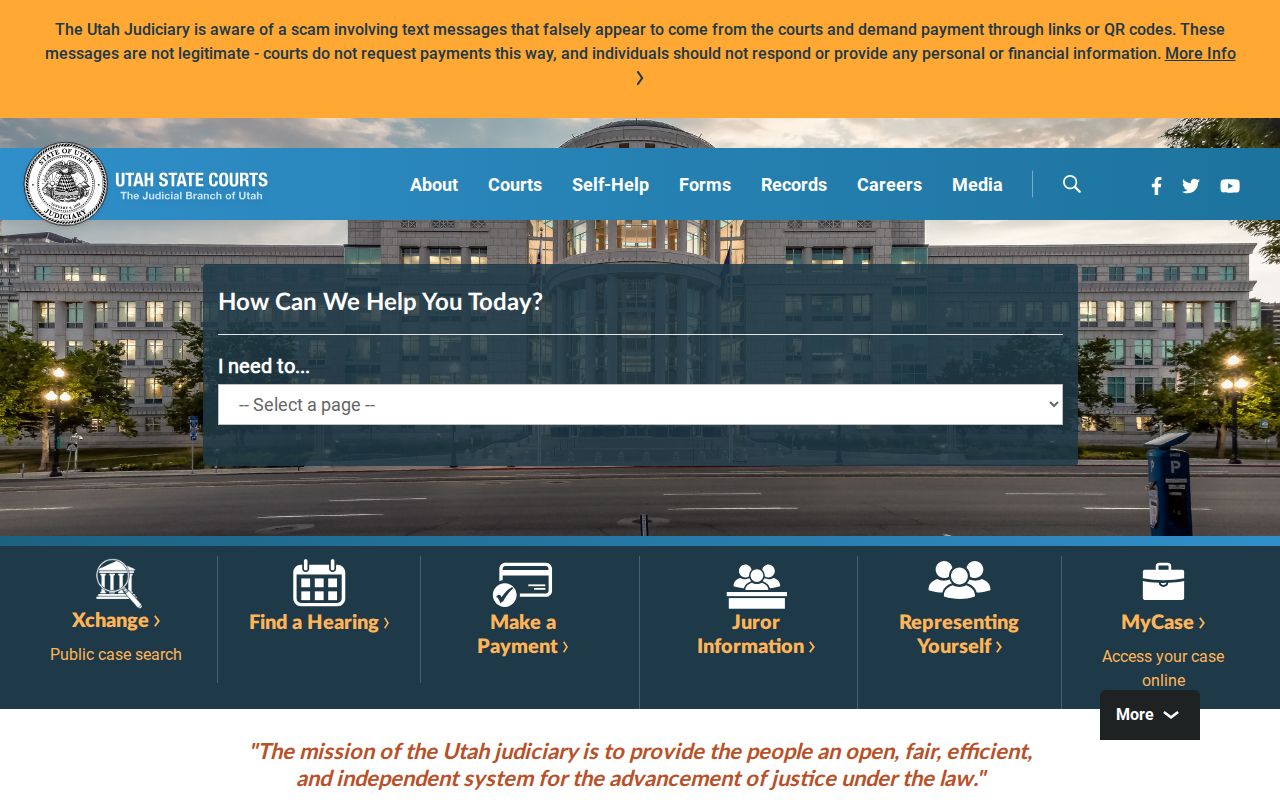
Read the docket first to understand the case. Then scan Juab County's recorded instruments for any judgment or lien filed against the parcel. For case access, Utah Courts Xchange posts guest, login, and registration choices on its own screens. That interface stands apart from the Recorder's deed and lien index.
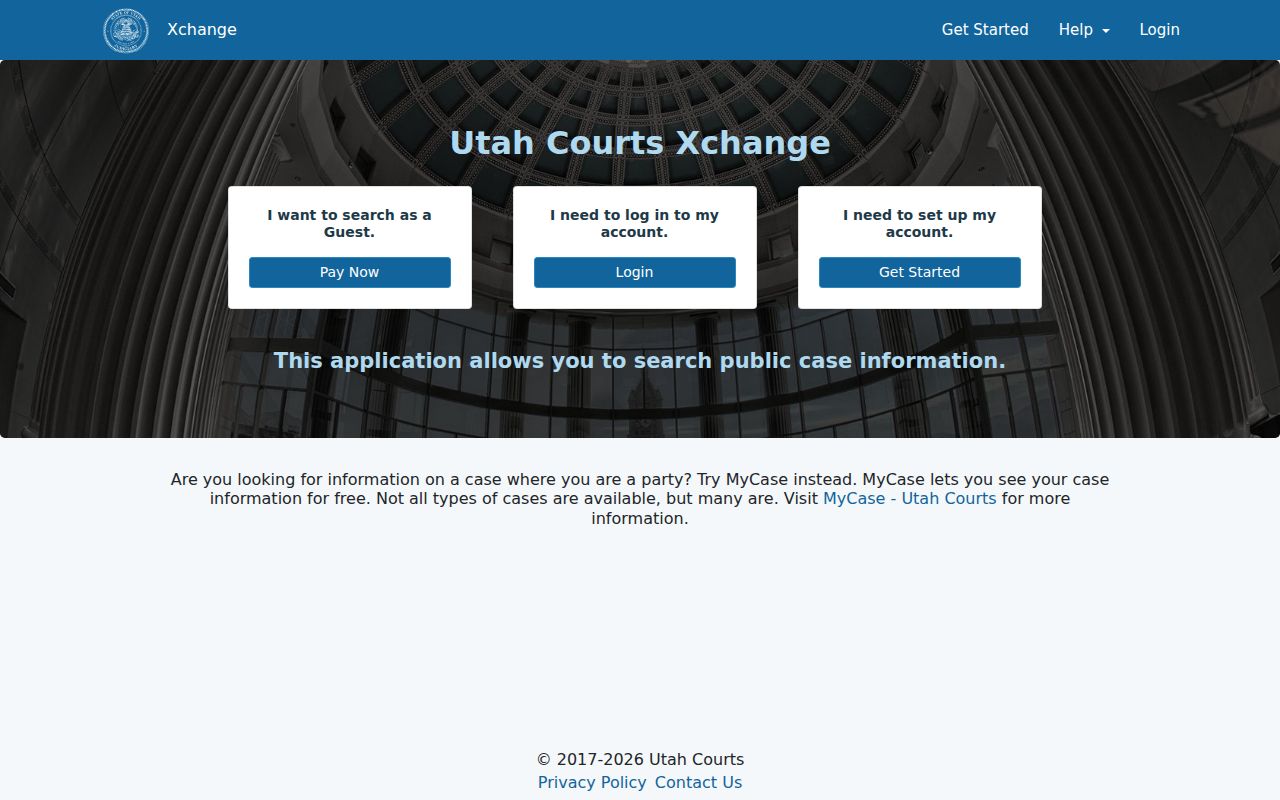
A court result can surface a case number or party name. The Recorder's recorded instrument remains the county source for whatever was filed against the land itself.
Juab County Deed Records in EagleWeb
Juab EagleWeb is the county's public doorway for property and recorder searches. Its landing page offers Enter, Register, Login, Help, Fraud Notify, and About choices. It needs JavaScript and cookies to run. Web access runs $10 per day, $100 per month, or $1,000 per year. Which searches or images open without a subscription is not stated. Explore the portal to see what it exposes. Then confirm any important instrument with the office that recorded it.
| Grantor / grantee controls | Historical indexes use both parties, but live search-field labels were not exposed. |
|---|---|
| Document type and date | Exact dropdowns, date rules, and required fields remain unverified. |
| Online start year | The county’s public landing page does not publish its deed-index cutoff. |
| Images and downloads | Image charges, result caps, and export behavior need an interactive check. |
For the office's duties and current published fees, see the Recorder's page on Juab County recording and copy services.
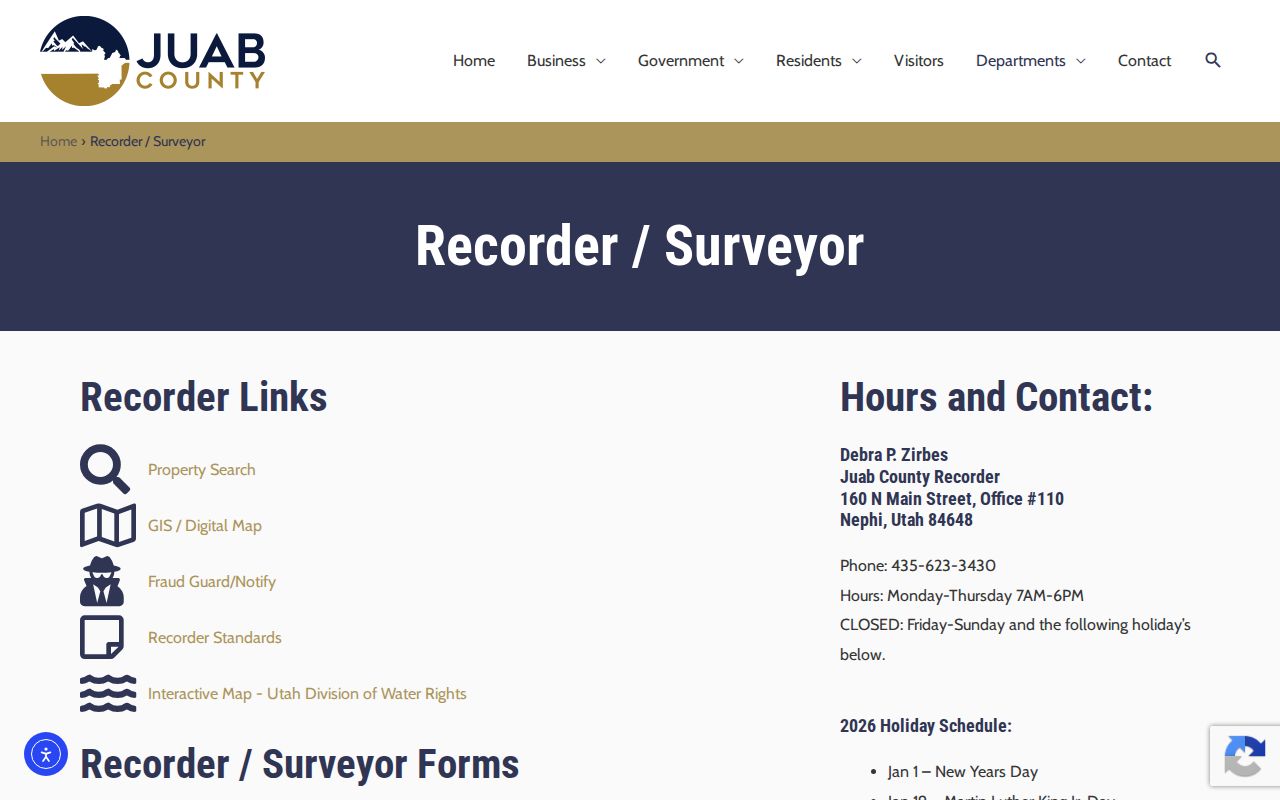
The portal is for discovery. The Recorder is for confirmation. An important deed deserves both.
Juab County Deed Records in the 18-Reel Index
A chain of title can reach past the modern web index. Utah State Archives series 6177 is the fallback. Its full title, "Juab County (Utah). County Recorder Grantor and grantee indexes," spans 18 microfilm reels. The finding aid lists its coverage. It includes deeds, final judgments, claims, patents, and decrees affecting title or possession of real property registered with the Recorder. Search both directions. A grantee entry points to the instrument by which an owner received an interest. A grantor entry shows the later transfer out. The State Archives description for series 6177 details these holdings. Remember, the series is an index, not a deed image. Record the name, reel reference, and instrument details you need to request the underlying document.
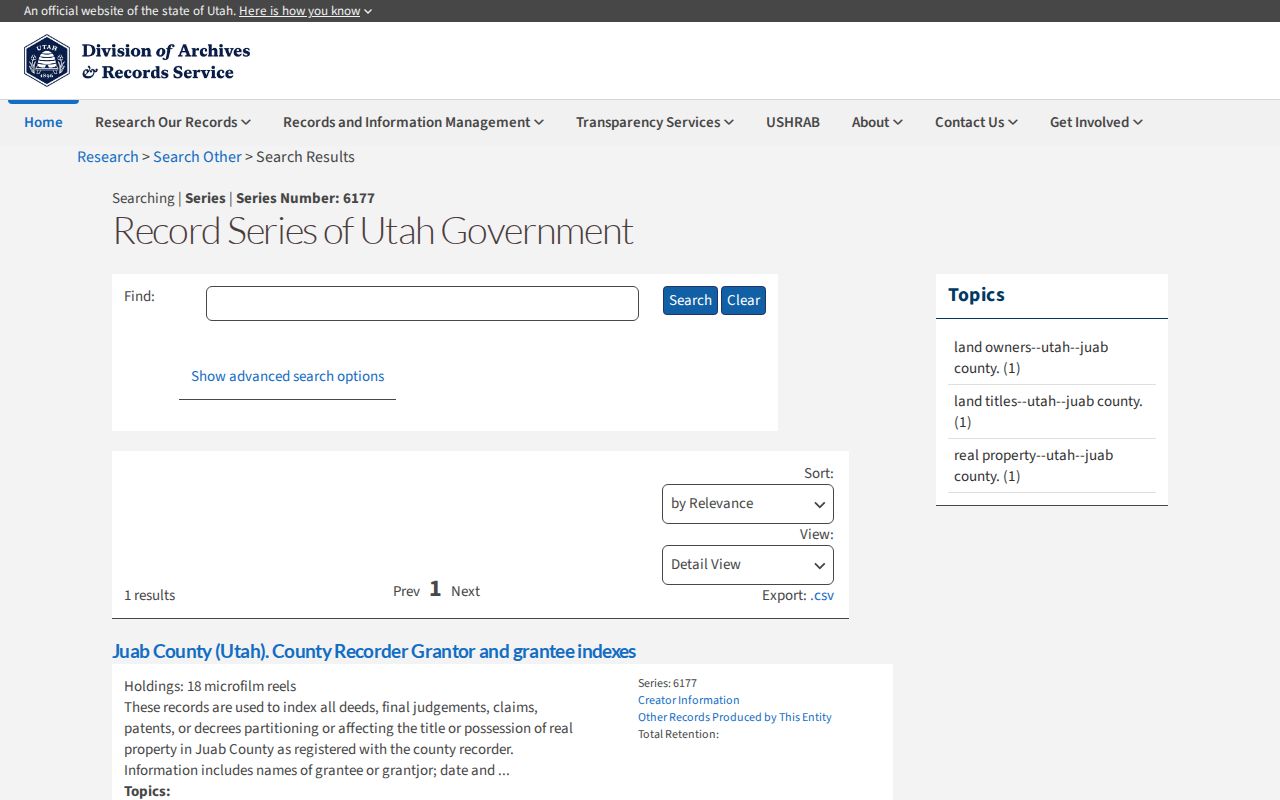
The reels open a documented route into older county indexes. They say nothing about when EagleWeb itself began, and no start year for the online system is published.
Older Juab County Deed Records on FamilySearch
FamilySearch's Utah, Juab County Records collection holds images from 1847 through 1948, some 62,885 in all. Its date table separates index books from deed images, so treat each range as covering one record type rather than the whole set.
| Record group | Verified years | Research use |
|---|---|---|
| General deed index | 1881–1890 | Early name-to-reference route. |
| Grantee and grantor indexes | 1889–1925; 1888–1925 | Trace both sides of a transfer. |
| Deeds | 1897–1922 | Read instrument terms and descriptions. |
| Land patents | 1881–1922 | Investigate early land records. |
| Mortgages | 1880–1942 | Check historic security instruments. |
To view the Juab County image collection, you may need an account, an affiliate library, or a FamilySearch Center for restricted images.
The collection reaches beyond deeds. Town-lot abstracts, water claims, mining records, powers of attorney, and wills all appear there, and any of them can explain a gap in an older property chain.
Follow the Juab County Grantor-Grantee Trail
A grantor gives up an interest; a grantee takes it. To trace an older Juab transfer, start with the newest deed reference you hold. Confirm its legal description. Then treat the named grantor as your next search lead. Work backward through the grantee side of the older index. Note each parcel description and recording date along the way. The county's online index start year is unpublished. Deeper work may therefore send you to the State Archives reels or the FamilySearch books described above.
- Find the latest deed reference and note the grantee, grantor, date, and legal description.
- Search the prior grantor as a grantee to locate the instrument by which that person received the parcel.
- Compare lot, block, survey, acreage, or metes-and-bounds language across each instrument.
- When the chain reaches an uncertain online limit, switch to the dated index and image collections.
- Grantor
- The person or entity conveying an interest.
- Grantee
- The person or entity receiving an interest.
- Chain of title
- The ordered sequence of recorded transfers tied to one legal description.
- Index reference
- Use the book/page or document reference shown by the source; EagleWeb’s exact current labels were not captured.
Juab County Deed Records Depend on a Clear Description
The Recorder’s published requirements say a recordable document must be an original or a qualifying electronic document, carry a brief caption stating its nature, include a legal description, list grantee names and mailing addresses, and be legible enough for certified copies. The county also states that an instrument needs a notary certificate with “subscribed and sworn” or equivalent language. The tax serial number should appear on the instrument, but the county says it is not part of the legal description.
A legal description may use a subdivision lot and block, a survey, metes and bounds, a mining claim, water-right numbers, or multiple exceptions. Juab’s fee schedule specifically treats metes-and-bounds descriptions, water-right numbers, mining claims, lots, units, rights of way, and exceptions as legal descriptions for fee purposes. That detail explains why a short street address is not enough when ordering or matching a deed.
For a court judgment or abstract, the Recorder says the submission must be an original or certified copy and identify the judgment debtor as required by Utah Code 57-3-106. Use the court docket to understand the proceeding, then use the county’s recorded instrument for the land-record reference.
Copy and Certification Costs for Juab County Deeds
Juab County's fee schedule took effect May 6, 2026. It prices an ordinary record copy at $1 per page. Certification adds a $5 sealed certificate on top of the page charge. Email copies of records or maps run a flat $10 per item. A property record card costs $1. Web access carries its own pricing. It runs $10 per day, $100 per month, or $1,000 per year. The county does not spell out which portal actions need that subscription.
Plat copies follow sheet size. An ownership plat up to 18 by 18 inches is $2 per sheet. A subdivision plat, survey map, or 24-by-36-inch plat is $4 per sheet. Recording a deed costs $45 per document plus $2 for each legal description beyond ten. A subdivision or other plat recording is $55 per 24-by-36-inch sheet. Each lot or unit designation adds $2. Confirm fees and payment methods with the Recorder before ordering Juab County property records.
The Recorder's public page offers help finding records and ownership plats. Staff will not draft legal documents or interpret them. They also will not give legal or engineering advice, or run a title search. A specific GRAMA request can seek an existing deed, index entry, plat, or fee schedule. It can also seek a document image.
Requesting a Juab County Deed Copy
EagleWeb is the first stop when a Juab County deed is indexed there. If the image will not load or the record is unclear, contact the Juab County Recorder / Surveyor at 160 N Main Street, Office 110, Nephi, Utah 84648, or call 435-623-3430. Office hours run Monday through Thursday, 7:00 a.m. to 6:00 p.m. The county page offers a message form. Still, confirm the copy-request channel, payment details, and mailing procedure with the office directly.
Give staff the names involved, an approximate recording date, the parcel number if known, and the legal description or plat reference. Ask which formats are available: ordinary copy, email copy, or certified copy. Ask too whether an older book or index must be consulted for the deed record. Certification confirms the copy came from the office. It is not a title opinion.
Recorded, not guaranteed. The Juab County deed index shows what was recorded, not every possible interest in land. The Recorder explicitly says it does not perform title searches or interpret documents, so obtain a professional title search when the question is clear ownership.
Verify a Recent Juab County Deed and Use Fraud Notify
A property owner who receives notice of a new filing should verify it. Use the county's EagleWeb Fraud Notify link or call the Recorder. The signup steps sit within the service itself. Never trust an unsolicited payment notice or a message requesting portal credentials. Scams thrive on panic.
For a recent transfer, check the newest recorded instrument. Line up its grantor, grantee, legal description, and recording reference against the parcel record. A closing can happen before an assessor association changes, and Juab publishes no roll-refresh interval. The deed record remains the most direct evidence of which instrument reached the Recorder. A title professional can judge whether the full chain supports a transaction.